One Request. One Expert. One Quote.
Skip the generic catalog. Share your project needs and we'll match you with the right hinge solution – standard or custom – with pricing and samples ready. Your quote is just a click away.

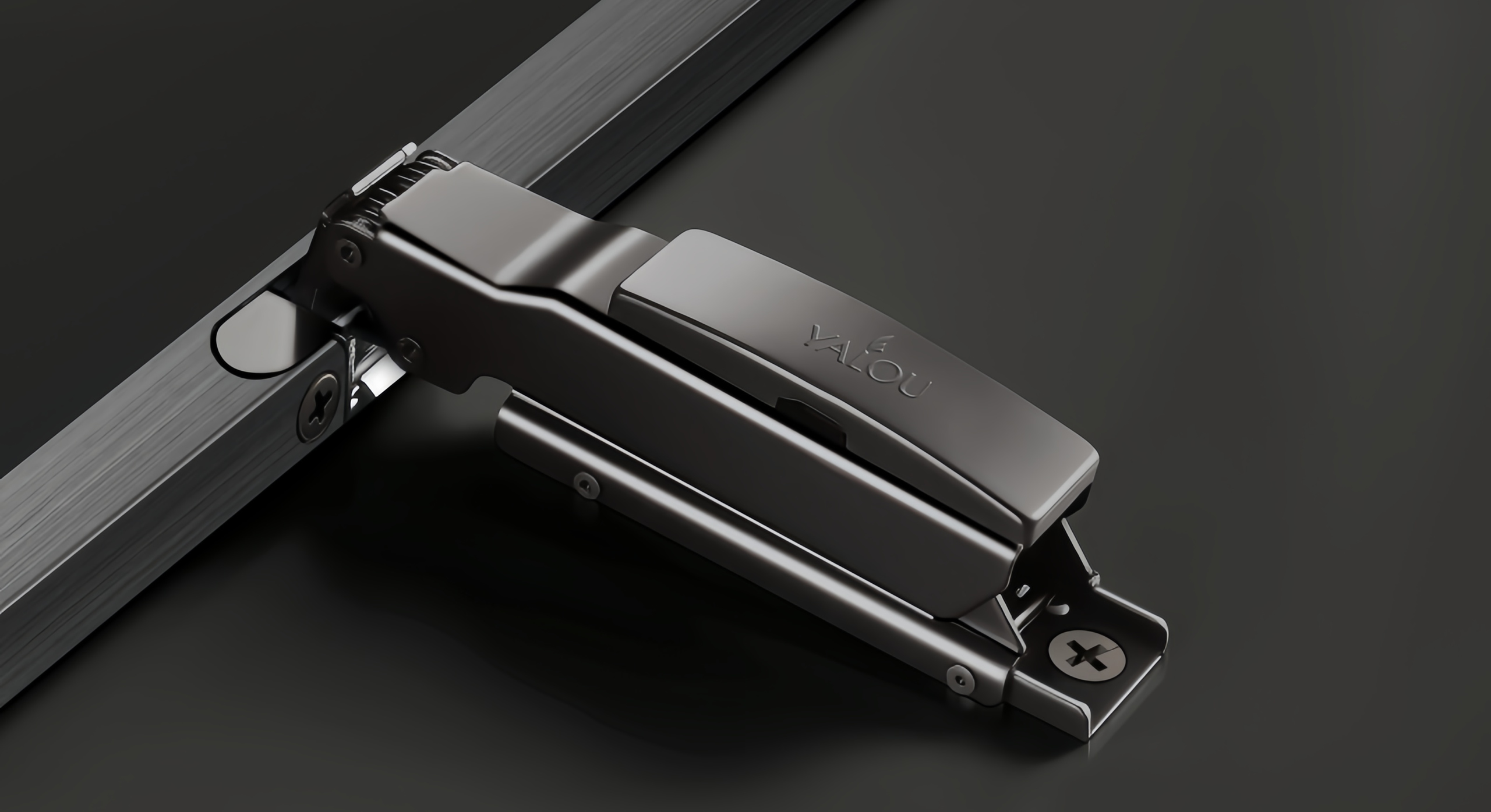
For engineers, quality managers, and product developers in the furniture industry, a Hinge Series represents far more than a list of SKUs. It is a carefully engineered product family where each variant is designed to meet specific performance criteria while sharing a common foundation of materials, manufacturing processes, and quality standards.
Understanding the technical underpinnings of a hinge series is essential for making informed sourcing decisions, ensuring product reliability, and optimizing manufacturing efficiency. At YALANG METAL, we have built our hinge series on decades of engineering expertise and rigorous testing protocols. This article provides a technical deep dive into the performance characteristics, testing methodologies, and application engineering considerations that define a world-class hinge series.
Before exploring performance and testing, it is essential to understand the engineering components that make up a modern hinge series.
The hinge arm is the structural backbone of the hinge, connecting the door to the cabinet through the mounting plate. Key parameters include:
Arm Profile: The cross-sectional shape determines bending resistance and overall strength. Common profiles include U-shaped, C-shaped, and reinforced box sections.
Wall Thickness: Typically ranging from 1.2mm to 2.0mm, thickness is selected based on the load rating of each hinge model within the series.
Material Grade: Cold-rolled high-tension steel (typically SPCC or equivalent) is standard, with yield strength exceeding 210 MPa.
The pivot allows the door to swing open and closed. Engineering considerations include:
Bearing Type: Ball bearings, needle bearings, or plain bearings—each has different friction characteristics and load capacities.
Bearing Material: Hardened steel or ceramic bearings offer lower friction and longer life than standard steel.
Pin Diameter: Larger diameter pins distribute load more effectively but require more space.
Most cabinet hinges incorporate a spring to hold the door closed and assist with opening:
Wire Diameter: Determines spring force; typically 1.0mm to 1.8mm depending on door weight.
Material: High-carbon spring steel with proper heat treatment for fatigue resistance.
Tension Adjustment: Some premium hinges offer adjustable spring tension to accommodate varying door weights.
For soft-close hinges, the dampening system is critical:
Hydraulic Cylinder: Filled with high-viscosity silicone oil, the cylinder provides resistance during the final closing phase.
Piston Design: Precision-ground pistons ensure consistent dampening force across temperature ranges.
Seal Integrity: High-quality seals prevent oil leakage, which is a common failure mode in low-quality soft-close hinges.
The mounting plate connects the hinge arm to the cabinet frame:
Height Options: Available in various heights (0mm, 3mm, 6mm, 9mm, 12mm, 15mm) to accommodate different door overlay requirements.
Material: Zinc alloy die-casting or stamped steel, depending on load requirements and cost targets.
Adjustment Mechanism: Eccentric cams or sliding plates provide 3D adjustability (height, depth, lateral).
Each hinge within a series is characterized by a set of performance metrics that define its suitability for specific applications.
Load capacity is the maximum static weight a hinge can support and is typically expressed per hinge or per pair.
| Hinge Type | Typical Load Capacity (per hinge) | Application |
|---|---|---|
| Light-Duty | 3-5 kg | Jewelry boxes, small cabinets |
| Standard | 8-15 kg | Kitchen cabinets, wardrobes |
| Heavy-Duty | 20-40 kg | Solid wood doors, commercial storage |
| Extra Heavy-Duty | 50+ kg | Industrial cabinets, heavy doors |
Technical Note: Load capacity must be derated for wide doors or doors with off-center handles, as leverage increases the effective load on the hinge.
Cycle life refers to the number of opening/closing cycles a hinge can withstand before performance degrades beyond acceptable limits. Industry standards vary:
EN 15570 (European Standard): Requires 30,000 cycles for kitchen cabinet hinges.
ANSI/BHMA A156.9 (American Standard): Requires 50,000 cycles for heavy-duty hinges.
Premium Performance: Many high-end hinge series now offer 80,000 to 100,000 cycle ratings.
Testing Protocol: Cycle testing involves automated machines that open and close the hinge at a controlled rate, monitoring for wear, noise increase, and dimensional changes.
A critical but often overlooked parameter is the consistency of the opening angle across a production batch. High-quality hinge series maintain:
Angle Tolerance: ±2° from the nominal opening angle.
Repeatability: After 50,000 cycles, the opening angle should not deviate by more than ±1.5° from the original setting.
Measurement Method: Digital angle gauges or optical comparators are used to verify angle accuracy during production.
The force required to open and close the hinge affects user experience:
Opening Torque: Should be low enough for easy operation but high enough to hold the door in intermediate positions if required.
Closing Torque: For non-soft-close hinges, closing speed should be smooth and controlled.
Friction Consistency: Friction should remain consistent across the hinge’s service life; increases exceeding 20% indicate wear issues.
Corrosion resistance is critical for long-term reliability, particularly in high-humidity environments:
Salt Spray Testing (ASTM B117): Minimum 48 hours for standard indoor hinges; 96-200 hours for premium or marine-grade hinges.
Finish Types: Electroplating (zinc, nickel, chrome), electrophoresis, powder coating, and passivated stainless steel each offer different corrosion resistance levels.
Testing Evaluation: After salt spray exposure, hinges are inspected for red rust, white rust, and blistering.
A comprehensive testing regime is essential to ensure that every hinge in the series meets performance claims. At YALANG METAL, our quality testing covers multiple dimensions:
Every production batch undergoes dimensional verification:
Critical Dimensions: Mounting hole spacing, arm width, plate thickness, pivot location.
Inspection Tools: Coordinate Measuring Machines (CMM), optical comparators, calipers, and go/no-go gauges.
Tolerances: Typically held to ±0.1mm for critical dimensions; ±0.3mm for non-critical.
Load Testing: Static load tests determine the maximum load a hinge can support before permanent deformation.
Torque Testing: Measure opening and closing torque under controlled conditions.
Drop Testing: For soft-close hinges, ensure the dampening mechanism prevents impact even when the door is released from fully open.
Temperature Cycling: Test hinges from -20°C to +60°C to ensure performance across climate ranges.
Humidity Exposure: High-humidity chambers (85°C / 85% RH) test corrosion resistance and seal integrity.
UV Exposure: For hinges with visible finishes, UV testing ensures color stability over time.
Cycle Testing: As described above, automated testing to rated cycle count.
Overload Testing: Simulate abuse conditions—e.g., hanging weight on the door while open, slamming the door closed.
Noise Testing: Measure decibel levels during operation to ensure quiet performance (target: <30 dB for premium hinges).
Selecting the correct hinge from a series for a specific application requires engineering judgment.
Challenges: Wood movement due to humidity, significant weight (15-25 kg per door), frequent use.
Solution:
Select heavy-duty hinges from the series with load capacity of 25+ kg per hinge.
Use 3 hinges per door (standard for doors over 2400mm height).
Choose mounting plates with vertical adjustment to accommodate wood expansion/contraction.
Challenges: No frame for mounting, visibility of hardware, glass weight.
Solution:
Use glass-door specific hinges with clamping mechanisms.
Select stainless steel finish for aesthetic appeal.
Ensure hinge arm profile does not obstruct glass edges.
Challenges: Moisture, condensation, potential for corrosion.
Solution:
Choose 304 stainless steel hinges from the series or hinges with heavy-duty electrophoretic coating.
Verify salt spray test rating of 96+ hours.
Select hinges with sealed bearings to prevent moisture ingress.
Challenges: Access to blind corners, limited clearance.
Solution:
Select 135° hinges from the series for standard corner applications.
For extremely tight corners, consider 165° or over-travel hinges.
Challenges: Multiple product lines with varying hinge requirements.
Solution:
Standardize on a single hinge series across all product lines.
Use adjustable-angle hinges for any unique corner applications to reduce SKU count.
Select a series with a wide range of mounting plate heights to accommodate varying overlay requirements.
Understanding tolerance stacking is essential for ensuring consistent performance across a hinge series.
When multiple components are assembled, individual tolerances combine to affect overall performance:
Hinge Arm Tolerance (±0.1mm)
Mounting Plate Tolerance (±0.15mm)
Cabinet Manufacturing Tolerance (±0.5mm)
Door Manufacturing Tolerance (±0.5mm)
Total Potential Deviation: Up to 1.25mm, which can affect door alignment and operation.
This is why 3D adjustability is critical in a modern hinge series:
Height Adjustment (±2mm): Compensates for cabinet/door height variations.
Depth Adjustment (±2mm): Compensates for door thickness and mounting plate variations.
Lateral Adjustment (±2mm): Compensates for side-to-side manufacturing variations.
With these adjustments, manufacturers can maintain perfect alignment despite cumulative tolerances.
For quality-conscious manufacturers, traceability is non-negotiable.
Every hinge in our series is traceable to:
Raw Material Batch: Steel coil certification, plating batch, packaging materials.
Production Date: Manufacturing date, shift, and machine number.
Inspection Records: Dimensional measurements, performance test results, and quality audit findings.
Material Certificates: Mill certificates for steel and other raw materials.
Test Reports: Cycle test reports, load test reports, salt spray test results.
Inspection Reports: Dimensional inspection results for each production batch.
A Hinge Series is a carefully engineered product family where technical performance, quality consistency, and application versatility are the cornerstones. By understanding the engineering anatomy, performance metrics, testing protocols, and application engineering considerations discussed in this article, technical professionals can make informed decisions that ensure product reliability and customer satisfaction.
At YALANG METAL, our hinge series is built on engineering excellence. We maintain strict quality control throughout product development and manufacturing, focusing on material selection, structural performance, durability, consistency, and user experience. Our commitment to Fast Development, Continuous Innovation, and Reliable Quality ensures that every hinge in our series meets the demanding requirements of today’s furniture industry.
Let us be your technical partner in hardware solutions.