One Request. One Expert. One Quote.
Skip the generic catalog. Share your project needs and we'll match you with the right hinge solution – standard or custom – with pricing and samples ready. Your quote is just a click away.

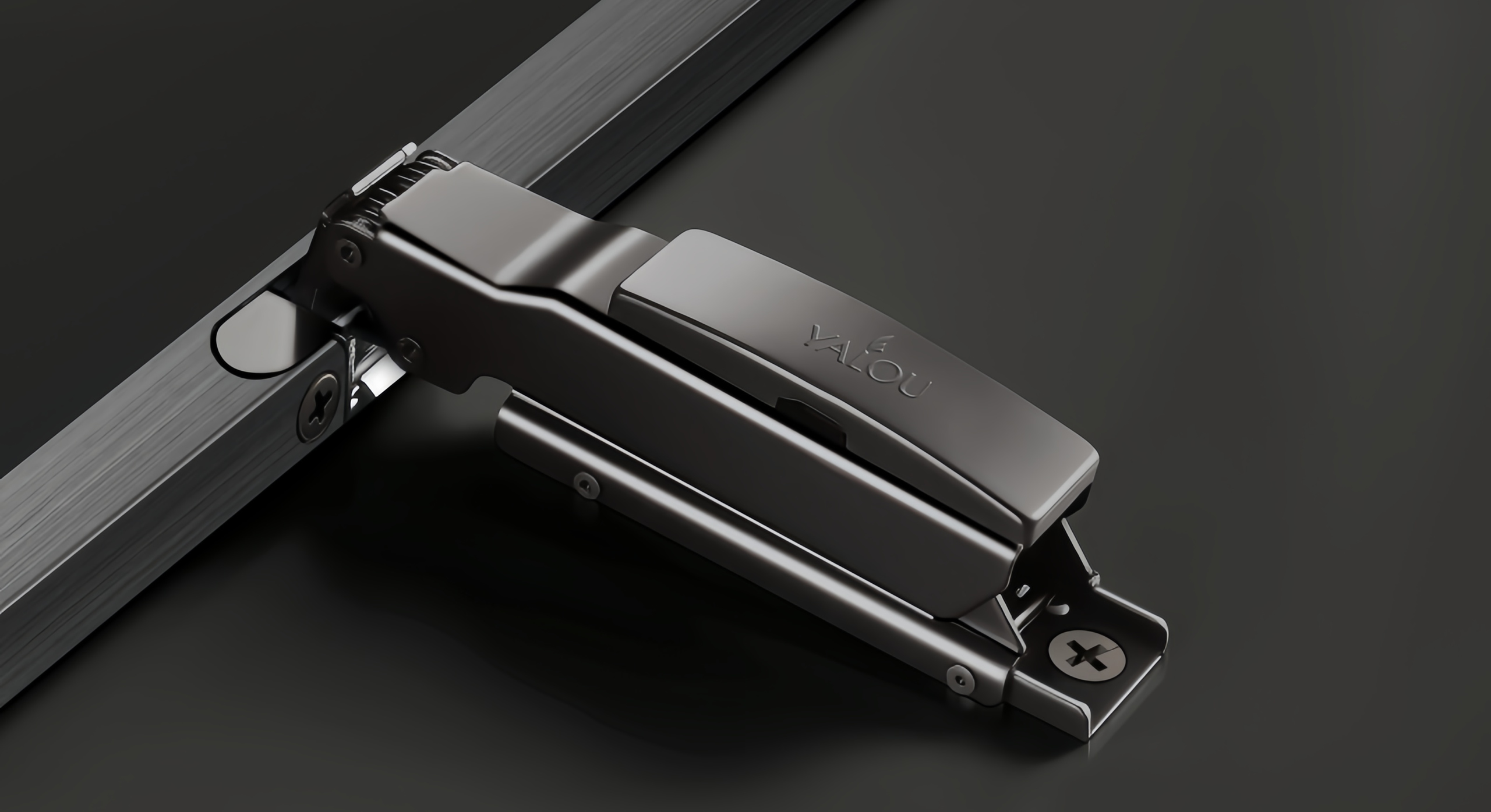
When we talk about a Slide Rail Series, we are not merely discussing a metal track with bearings. We are discussing a precision mechanical system that directly influences the usability, safety, and lifespan of a final product. For technical buyers, production managers, and R&D engineers, selecting the right slide rail series involves far more than matching a part number to a catalog.
It requires a deep understanding of load dynamics, installation tolerances, material science, and long-term reliability. At YALANG METAL, we have spent years helping global partners navigate these complexities. This article serves as a technical guide to making informed decisions when sourcing slide rails.
To select a slide rail series with confidence, you must look beyond basic dimensions and focus on the engineering specifications that determine real-world performance.
Most catalogs list a “load capacity,” but it is critical to distinguish between static load (weight the rail can support while stationary) and dynamic load (weight it can support while moving). For a drawer that will be opened and closed thousands of times, dynamic load is the true measure of durability.
Light Duty (25-45kg): Suitable for jewelry boxes, small office drawers.
Medium Duty (45-70kg): Standard kitchen cabinets and general furniture.
Heavy Duty (100kg+): Industrial storage, tool chests, and medical equipment.
Pro Tip: Always de-rate your selected load capacity by 20-30% to account for impact forces and uneven weight distribution.
The extension type defines how much access the user gains.
3/4 Extension: Leaves part of the drawer concealed; suitable for shallow storage.
Full Extension: The drawer extends fully, providing complete access. This is the most common choice for premium furniture.
Over-Travel Extension: Allows the drawer to extend slightly beyond the cabinet frame, making cleaning and maintenance easier.
A slide rail series typically consists of two or three sections.
Two-Section Slides: Generally less expensive and suitable for lighter loads, but extension is limited.
Three-Section Slides: Provide full extension and better load distribution, making them the industry standard for most applications.
The ball bearing design affects both smoothness and noise.
Caged Bearings: Ball bearings held in a retainer, ensuring even spacing and reducing friction.
Uncaged Bearings: More bearings per track, often allowing for higher load capacities but potentially increasing cost.
One of the most common issues in manufacturing is not a defect in the slide rail itself, but a mismatch between the slide rail and the cabinet’s manufacturing tolerances.
Different slide rail series require specific clearance widths (usually between 12mm to 17mm per side). If your cabinet manufacturing has high precision (±0.5mm), you can opt for tighter-clearance slides. However, if your production process has wider tolerances, a slide rail series with a broader adjustment range is essential to prevent binding.
Understanding the mounting method simplifies assembly:
Screw-On Mounting: Traditional and secure; requires pre-drilled holes.
Clip-On Mounting: Allows for tool-less installation and removal; ideal for rapid assembly lines.
Bracket Mounting: Used for heavy-duty applications where structural support is paramount.
Slide rails rely on the cabinet being square. If the cabinet frame is out of square by more than 1mm across the height, the slide rail will experience side-load stress, leading to premature wear. In such cases, selecting a slide rail series with built-in adjustment mechanisms (like eccentric cams) can compensate for manufacturing imperfections.
The longevity of a slide rail series heavily depends on its surface treatment. Corrosion is the enemy of smooth operation.
Cold-Rolled Steel (CRS): Provides excellent strength and dimensional consistency. It is the gold standard for most furniture slide rails.
Stainless Steel (304/316): Essential for marine environments, outdoor furniture, or high-humidity kitchens. While more expensive, it offers superior rust resistance.
Zinc Plating (Electro-galvanized): A cost-effective anti-corrosion coating suitable for indoor use.
Powder Coating/Epoxy: Provides a thicker, more durable finish that resists scratches and chemicals.
Specialized Processes: Some manufacturers use a galvanized blue sealing process, which creates a dense, passivated layer that offers superior oxidation resistance compared to standard plating.
As a procurement professional, you are tasked with optimizing total cost of ownership, not just unit price. Here is how to apply value engineering to your slide rail series selection:
A slightly cheaper slide rail series that requires re-drilling holes or shimming on the assembly line costs you labor hours. A slide rail with consistent dimensions and clear marking reduces installation time.
If you use ten different slide rail models across your product range, you increase inventory complexity and unit costs. Strategic standardization—reducing to three or four core models—simplifies purchasing, reduces safety stock, and improves your negotiation leverage.
Sometimes, a small custom modification to a standard slide rail series can eliminate the need for separate adaptor brackets, reducing part count and assembly complexity. This is where OEM partnerships add real value.
Understanding why slide rails fail helps you write better quality specifications for your suppliers.
| Failure Mode | Root Cause | Preventive Measure |
|---|---|---|
| Binding/Jamming | Misalignment or insufficient side clearance | Ensure cabinet squareness and verify mounting hole alignment. |
| Sagging | Under-specification load capacity | Choose a slide rail with a higher dynamic load rating. |
| Noise/Clicking | Damaged bearings or debris | Ensure clean assembly environment and use sealed bearings. |
| Corrosion | Inadequate surface treatment for environment | Specify appropriate coating (e.g., passivated galvanized for high humidity). |
| Soft-Close Failure | Hydraulic cylinder leakage | Select high-temperature-resistant grease; request endurance test reports. |
At YALANG METAL, we do not view ourselves as just a manufacturer, but as an extension of your engineering team. Our approach is consultative:
Design Review: We analyze your product drawings to recommend the most suitable slide rail series, considering drawer depth, width, intended usage, and aesthetic requirements.
Rapid Prototyping: For OEM projects, we provide samples quickly so you can test fit and function before mass production.
Consistent Quality: We maintain strict control from material procurement to final packaging, ensuring every slide rail that leaves our factory meets your specific tolerance and performance criteria.
We believe that a reliable slide rail series should never be the reason a project fails. It should be the component that quietly, reliably, and consistently supports your product’s reputation.
When you are in the market for a slide rail series, you are looking for a partner who understands the relationship between engineering specifications and actual application. You need a supplier who can advise you on load calculations, installation best practices, and material selection to ensure your final product stands out in a crowded market.
YALANG METAL is built for exactly that purpose. We help partners reduce development time, improve product competitiveness, and respond faster to market demands—not just with standard products, but with engineered solutions.
Let’s discuss your next project. Your hardware should work harder, last longer, and fit better. That is what we deliver.