One Request. One Expert. One Quote.
Skip the generic catalog. Share your project needs and we'll match you with the right hinge solution – standard or custom – with pricing and samples ready. Your quote is just a click away.

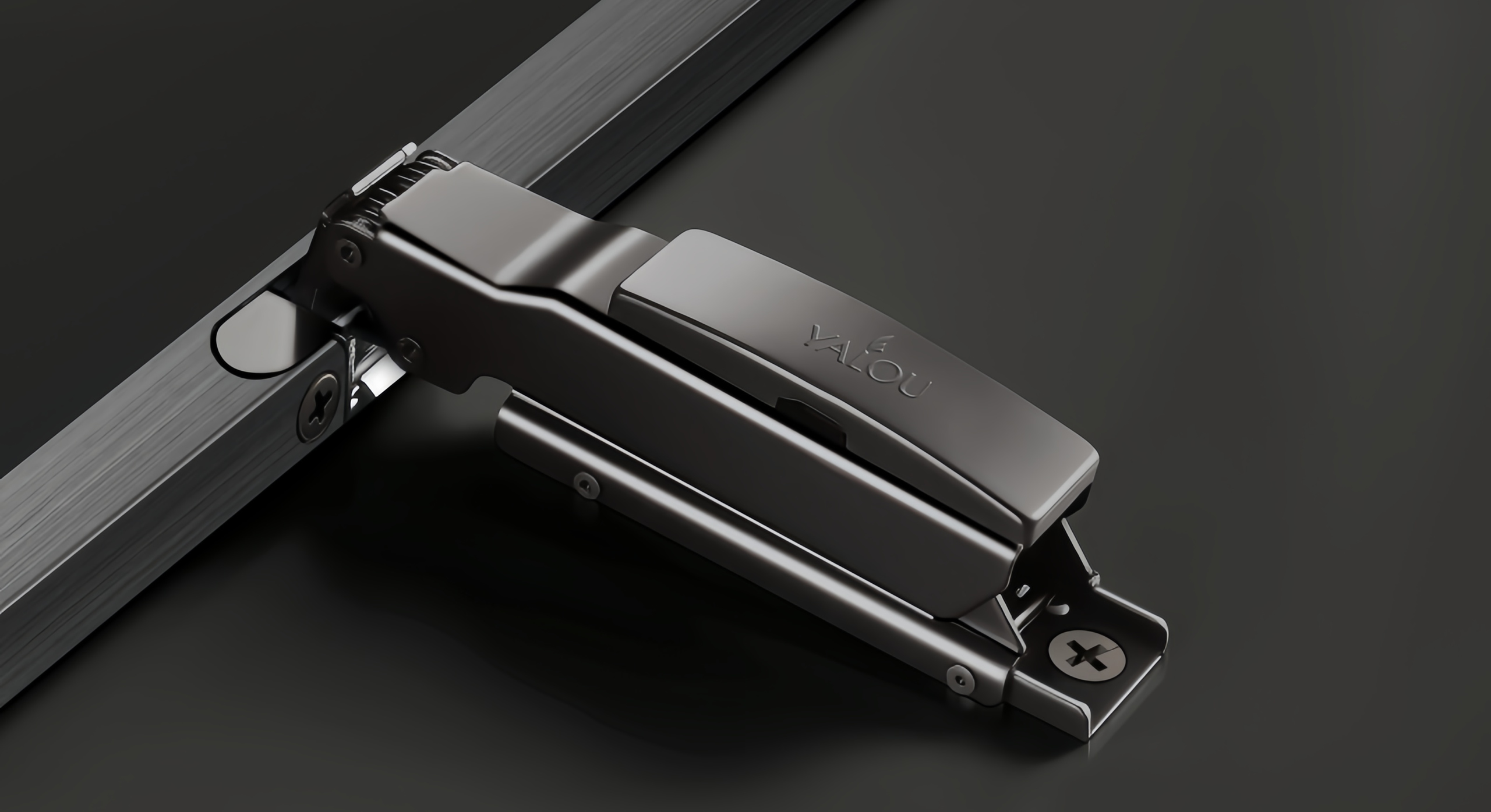
In the world of cabinetry and furniture design, not every door opens along a standard 90-degree or 180-degree arc. As interior spaces become more complex and furniture designs grow increasingly innovative, the demand for Special-Angle Hinges has risen significantly. These specialized hardware components are the unsung heroes that enable creative layouts, maximize storage efficiency, and solve architectural challenges that standard hinges simply cannot address.
At YALANG METAL, we understand that one size does not fit all. Our special-angle hinge solutions are engineered to meet the diverse needs of furniture brands, cabinet manufacturers, and hardware distributors worldwide. This article explores everything you need to know about special-angle hinges and why they are essential for modern furniture applications.
A special-angle hinge is a precision-engineered hardware component designed to accommodate door opening angles that deviate from standard configurations. While conventional hinges typically support 90°, 180°, or 270° openings, special-angle hinges are manufactured to operate at custom angles such as 30°, 45°, 60°, 120°, 135°, 150°, 165°, or any bespoke degree required by a specific furniture design.
These hinges feature adjustable or fixed pivot points that allow doors to open to precise angles, ensuring optimal clearance, accessibility, and aesthetic integration. They are commonly used in:
Corner cabinets and angled kitchen units
Custom wardrobes with angled or sloped fronts
Furniture for irregularly shaped rooms
Marine and RV cabinetry
Retail display cases and commercial fixtures
Architectural millwork with unique geometry
Standard hinges are designed for perpendicular and parallel applications—doors that sit flush against a flat cabinet frame. However, modern interior design frequently challenges these conventions:
Angled Cabinets: Kitchens increasingly feature angled corner units to maximize space utilization, requiring hinges that open at compound angles.
Sloped Furniture: Wardrobes with sloped fronts (often seen in loft conversions or attic rooms) demand hinges that accommodate non-vertical mounting surfaces.
Aesthetic Considerations: Architects and designers use angled doors to create visual interest, breaking away from rectangular monotony.
Accessibility Requirements: Special angles may be necessary to ensure doors do not obstruct walkways or other functional elements when open.
In these scenarios, a special-angle hinge is not merely an option—it is a necessity.
These hinges are manufactured to a specific predetermined angle, such as 45° or 135°. The leaf surfaces are designed to meet at that exact angle, providing precise and repeatable alignment. They are ideal for applications where the required angle is consistent and does not need adjustment.
These versatile hinges feature a pivot mechanism that allows the installer to set the opening angle within a defined range (e.g., 90° to 165°). This adjustability accommodates varying degrees of cabinet slant and simplifies inventory management for manufacturers who produce multiple product lines.
For applications requiring automatic closing or self-latching, spring-loaded variants incorporate tension mechanisms that return the door to a closed position. These are particularly useful in RV and marine environments where movement is common.
For high-end furniture, concealed special-angle hinges mount flush within the cabinet structure, maintaining a clean, minimalist appearance. Despite being hidden, they deliver full functionality and precise angle control.
When selecting a special-angle hinge for your project, the following technical parameters should guide your decision:
Determine the exact angle your door needs to achieve. For corner cabinets, 135° is a common choice, while 165° is preferred when doors need to fold back nearly flat against adjacent surfaces. Custom angles can be produced for unique designs.
Special-angle hinges must be compatible with both the door and the cabinet frame. Consider:
Door thickness and material (solid wood, MDF, particle board, metal)
Cabinet frame construction (face frame vs. frameless)
Clearance requirements for door swing
Like all furniture hardware, special-angle hinges should be fabricated from durable materials with appropriate surface treatments:
Steel: High-tension cold-rolled steel provides strength and stability.
Stainless Steel (304): Offers excellent corrosion resistance for high-humidity environments.
Zinc Plating/Electrophoresis: Standard finishes for indoor use.
Powder Coating: Provides a durable, decorative finish in various colors.
Even with special angles, hinges must support the weight of the door. Heavy solid wood or glass doors require hinges with reinforced construction and larger mounting plates to distribute stress effectively.
Premium special-angle hinges offer three-dimensional adjustability (height, depth, and side-to-side) to compensate for manufacturing tolerances and ensure perfect door alignment.
One of the most common applications for special-angle hinges is corner cabinetry. A 135° hinge allows a door to wrap around the corner, providing full access to a blind corner cabinet without requiring a complex pull-out system. This maximizes storage while maintaining a seamless front appearance.
In loft conversions, wardrobes often feature sloped fronts to follow the roofline. A 45° or 60° special-angle hinge enables doors to open naturally despite the non-vertical surface, preserving both functionality and aesthetics.
When cabinets are installed on angled walls (common in hexagonal rooms or architectural features), special-angle hinges ensure doors align correctly and open without binding against adjacent surfaces.
Space is at a premium in boats and recreational vehicles. Angled cabinetry allows for optimized storage in unconventional spaces, and special-angle hinges make these designs practical and durable in mobile environments.
Angled display cases and kiosks use special-angle hinges to create inviting product presentations while allowing easy access for staff to restock or rearrange items.
Off-the-shelf special-angle hinges may not always meet the exact requirements of a unique furniture design. This is where OEM (Original Equipment Manufacturer) and ODM (Original Design Manufacturer) capabilities become invaluable.
If your design requires a non-standard angle not available in catalogs, a manufacturer with strong R&D capabilities can develop a custom solution. This involves engineering the pivot geometry, testing prototypes, and refining the design to achieve smooth, consistent operation.
Depending on the environment (high humidity, high temperature, outdoor exposure), materials may need to be specified accordingly. OEM partners can offer stainless steel, aluminum, or specialized coatings to match your application.
For furniture brands seeking differentiation, custom hinge designs with branded logos, unique finishes, or specialized packaging enhance product identity and perceived value.
At YALANG METAL, quality assurance is integral to every special-angle hinge we produce. Our products undergo rigorous testing to ensure reliability:
Cycle Testing: Hinges are tested for 50,000 to 100,000 opening/closing cycles to simulate years of use.
Load Testing: Hinges are subjected to weights exceeding their rated capacity to ensure safety margins.
Salt Spray Testing: Corrosion resistance is verified through standardized salt spray exposure.
Dimension Inspection: Precision measurement tools ensure every hinge meets specified tolerances.
At YALANG METAL, we are committed to helping our partners win their markets. Our expertise in special-angle hinges includes:
Fast Development: We can quickly transition from concept to prototype, reducing your time-to-market.
Continuous Innovation: We continuously refine our hinge designs to improve durability, smoothness, and adjustability.
Reliable Quality: Strict quality control from material sourcing to final packaging ensures consistent performance across every shipment.
Responsive Service: Our team is ready to provide technical support, samples, and production coordination.
We believe that being a hardware supplier is about more than manufacturing products—it is about providing solutions that enable your success.
A Special-Angle Hinge is the key to unlocking innovative furniture designs that standard hardware cannot accommodate. Whether you need a 45° hinge for a sloped wardrobe, a 135° hinge for a corner kitchen cabinet, or a fully custom angle for a unique architectural feature, the right hinge makes the difference between a design that works and one that disappoints.
By partnering with a manufacturer that understands the engineering and application demands of special-angle hinges, you ensure that your furniture products meet the highest standards of functionality, durability, and aesthetic appeal.
Let YALANG METAL be your partner in creating furniture that stands out. We are ready to develop, customize, and deliver the special-angle hinges your designs deserve.