One Request. One Expert. One Quote.
Skip the generic catalog. Share your project needs and we'll match you with the right hinge solution – standard or custom – with pricing and samples ready. Your quote is just a click away.

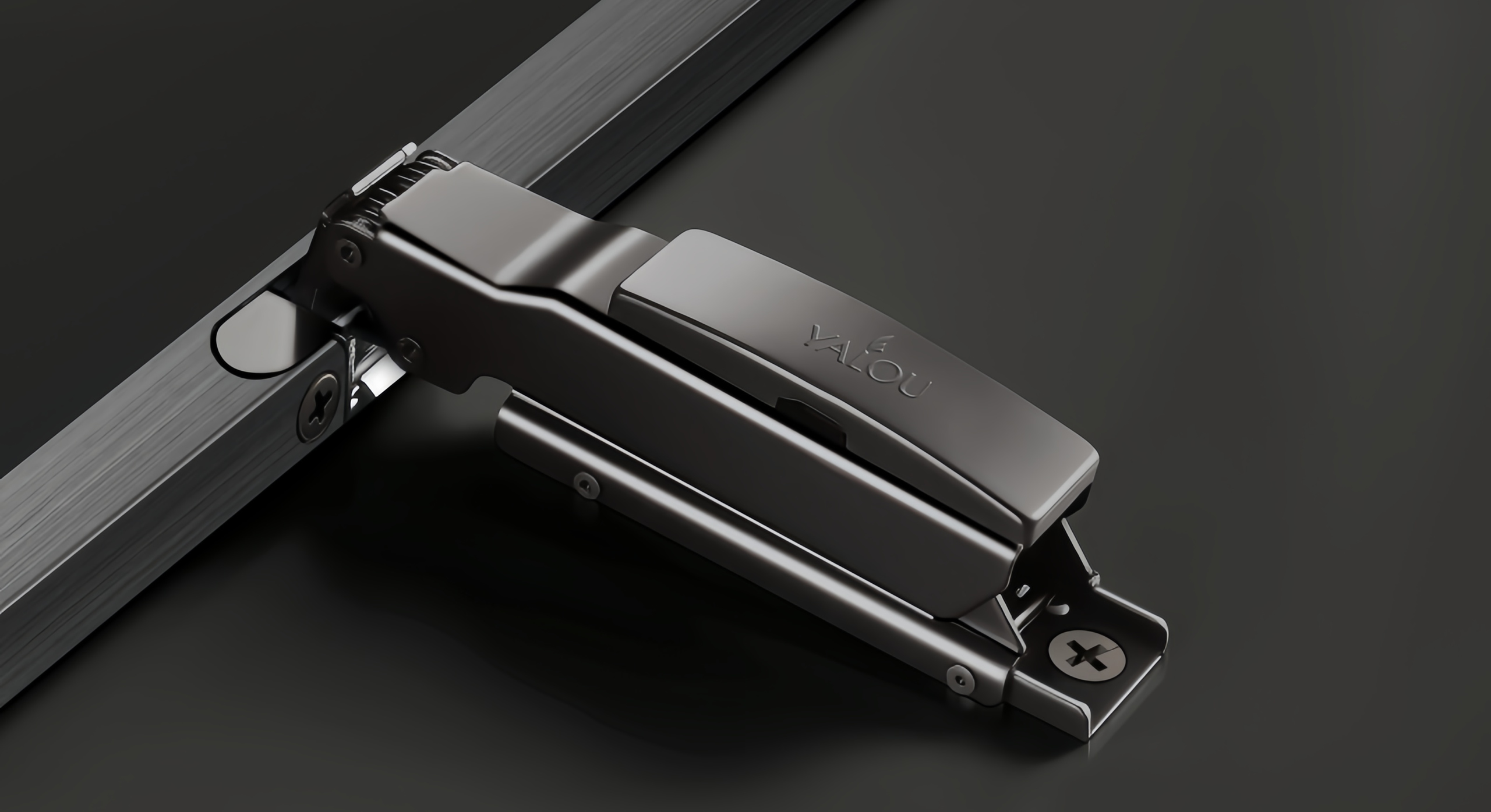
A Special-Angle Hinge is a sophisticated piece of engineering that solves complex design challenges. However, even the highest-quality hinge will underperform if it is not installed correctly, or if the surrounding cabinetry does not accommodate its specific requirements. For manufacturers, contractors, and installation teams, understanding the practical aspects of working with special-angle hinges is just as important as selecting the right product.
At YALANG METAL, we not only manufacture premium special-angle hinges—we also equip our partners with the knowledge and technical support they need to use them effectively. This article addresses the real-world challenges of special-angle hinge installation, common failure modes, and how a reliable supply chain partnership adds tangible value to your operations.
Installing a special-angle hinge requires precision and attention to detail. Unlike standard 90° hinges, where minor misalignments are often forgiving, special-angle hinges must meet exact geometric requirements to function smoothly.
Before installing any special-angle hinge, confirm that both the cabinet frame and the door are manufactured to the correct angles.
Check the Cabinet Opening: Use an angle finder or protractor to measure the actual angle of the cabinet frame. Variations beyond ±1° can cause binding or gaps.
Check the Door Edge Angle: If the door has a beveled or angled edge, ensure the hinge leaf is compatible with that profile.
Squareness Test: Even with special angles, the vertical and horizontal planes must be square to prevent the door from twisting during operation.
Special-angle hinges may require either surface mounting or mortising (recessing) into the door and frame.
Mortise Depth: If mortising is required, ensure the recess depth matches the hinge leaf thickness exactly. A mortise that is too deep will cause the door to sit inward; too shallow, and the door will protrude.
Template Usage: Always use a drilling template or CNC program specifically designed for the hinge model. This ensures consistent hole placement across multiple units.
Pilot Holes: Pre-drill pilot holes to prevent splitting, especially in solid wood or MDF with dense cores.
Modern special-angle hinges often feature 3D adjustability (height, depth, and lateral). Use these adjustments systematically:
Depth Adjustment: Set the door flush with the cabinet face.
Height Adjustment: Align the top and bottom edges of the door with adjacent cabinets.
Lateral Adjustment: Center the door within the opening to ensure even gaps on all sides.
Pro Tip: Make adjustments in small increments and test the door swing after each change. Over-tightening adjustment screws can strip threads or damage the hinge mechanism.
Special-angle hinges bear different loads depending on the door’s dimensions and material.
Oversized Doors: For tall or wide doors (e.g., 2400mm x 600mm), use three hinges instead of two to distribute the weight evenly and prevent sagging.
Heavy Materials: Solid wood, glass, or metal-faced doors require hinges with reinforced construction and additional mounting screws.
Swing Clearance: Ensure the door’s arc of travel is unobstructed by adjacent handles, walls, or neighboring cabinets, especially when opening at 135° or 165°.
Light Lubrication: A small amount of silicone-based lubricant on the pivot points ensures smooth operation and reduces wear.
Test Cycle: Open and close the door 5–10 times to verify smoothness, confirm the soft-close function (if applicable), and listen for unusual noises.
Gap Inspection: Measure the gap between the door and frame at three points (top, middle, bottom) to confirm consistent spacing.
Even with careful installation, issues can arise. Here is a diagnostic guide for common special-angle hinge problems:
| Problem | Likely Cause | Solution |
|---|---|---|
| Door Binds or Rubs | Incorrect hinge angle for the cabinet; cabinet not square | Verify the cabinet angle; use adjustable-angle hinge to compensate |
| Visible Gap Variation | Uneven mortising or mounting plate misalignment | Adjust depth and lateral screws; re-mortise if necessary |
| Squeaking or Grinding | Lack of lubrication; bearing damage | Apply lubricant; if noise persists, replace the hinge |
| Soft-Close Not Engaging | Hydraulic cylinder failure; door too heavy for rating | Check load capacity; replace with higher-rated hinge |
| Door Sags Over Time | Insufficient number of hinges; undersized screws | Add a third hinge; use longer or thicker mounting screws |
| Mounting Screws Loosen | Vibration (e.g., in RV/marine) or low-quality screws | Apply thread-locking compound; upgrade to stainless steel screws |
Beyond the technical aspects, sourcing special-angle hinges through a reliable supply chain partner like YALANG METAL delivers measurable business benefits.
Special-angle hinges are inherently less standardized than standard hinges, making inventory management a challenge. A manufacturer with flexible production capabilities can:
Reduce Your SKU Count: By offering adjustable-angle hinges that cover multiple angles, we help you consolidate inventory.
Provide Just-in-Time (JIT) Delivery: Quick turnaround on orders minimizes your warehousing costs and reduces the risk of obsolete stock.
Bulk Customization: For large projects, we can produce your exact specifications in a single batch, ensuring color consistency and dimensional uniformity.
A good supplier is a knowledge partner. We provide:
Installation Guides: Step-by-step instructions with diagrams tailored to your specific hinge model.
CAD Files: 2D and 3D drawings for integration into your product design software.
On-Site Training: For large-scale projects, we offer remote or in-person training for your assembly team.
Consistency is the foundation of a strong brand. Our special-angle hinges are manufactured under strict quality control:
Statistical Process Control (SPC): We monitor key dimensions during production to detect variations before they become defects.
Batch Traceability: Every batch is traceable to raw material certificates and production records.
Pre-Shipment Inspection: Random sampling ensures every shipment meets your acceptance criteria before it leaves our factory.
When you source custom special-angle hinges from YALANG METAL, we work with you to engineer cost-effective solutions without compromising quality:
Material Optimization: Recommending the most suitable steel grade and thickness for your load requirements.
Process Simplification: Designing hinges that require fewer assembly steps or simpler installation methods.
Packaging Efficiency: Custom packaging that protects hinges during transit while minimizing volume and weight.
Some manufacturers view special-angle hinges as a niche, low-volume product category. However, for furniture brands targeting premium segments, these hinges are a strategic differentiator.
Offering corner cabinets, angled displays, and custom millwork that competitors cannot produce gives your brand a unique selling proposition. Special-angle hinges enable these designs.
When a door opens smoothly at an unusual angle—without sagging, binding, or making noise—it leaves a lasting impression of quality. This translates into repeat business and positive word-of-mouth.
With reliable special-angle hinges available, designers are no longer constrained by standard geometry. They can push creative boundaries, knowing the hardware exists to support their vision.
The Special-Angle Hinge category is not just about unusual degrees—it is about solving real-world problems, enabling creative design, and delivering reliable performance where standard hardware falls short.
At YALANG METAL, we combine manufacturing excellence with deep application knowledge to support our partners at every stage—from product selection and installation guidance to after-sales support. Our mission is to help you win your market by providing hardware solutions that work perfectly, consistently, and affordably.
Whether you are a furniture manufacturer planning a new product line, a contractor tackling a complex installation, or a distributor expanding your catalog, we are ready to collaborate. Let us help you turn your design challenges into competitive advantages.